
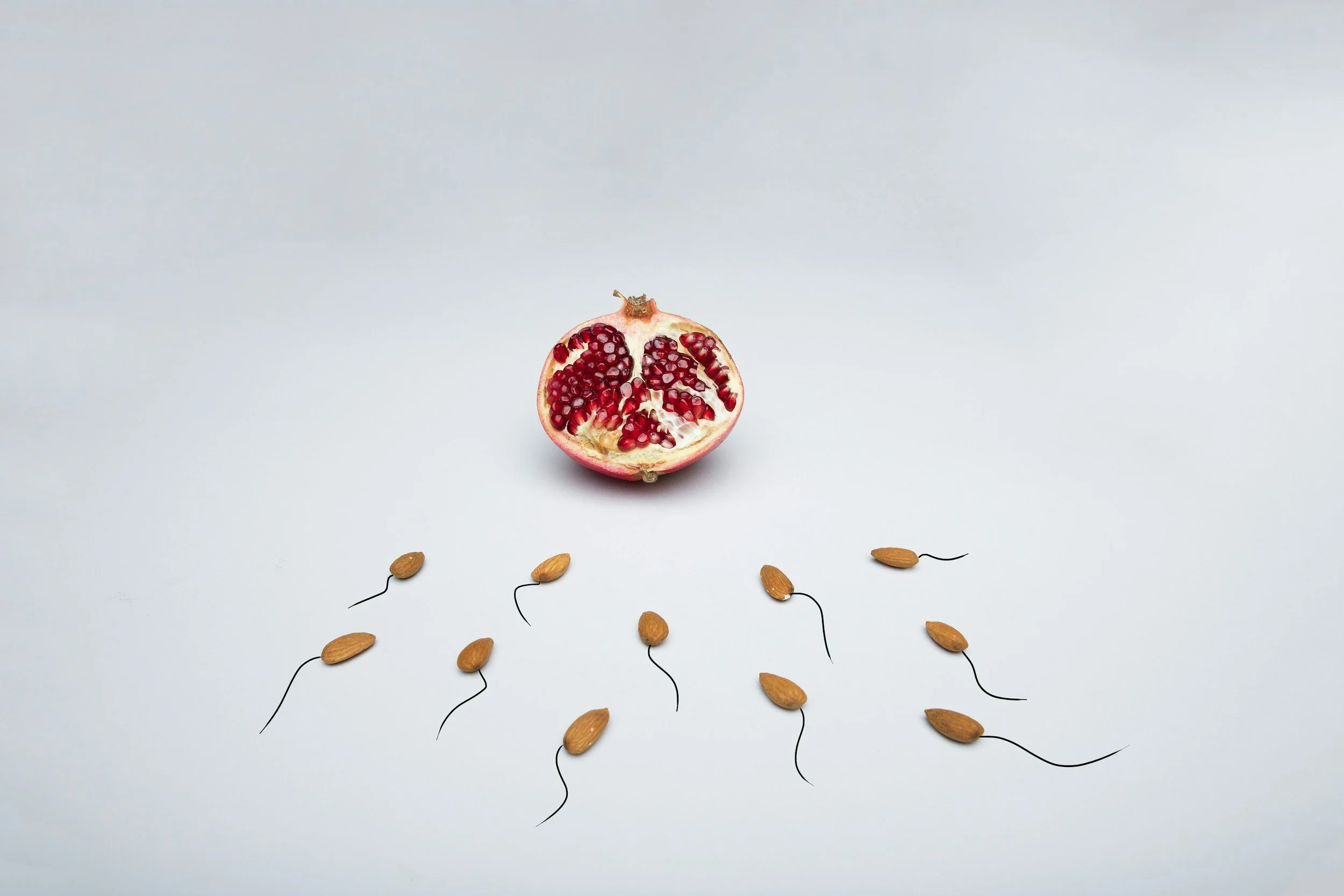
Here at Recharged PT, we are primarily concerned and focused on women’s health at all stages and phases of life. We have talked extensively before about cycle tracking, pelvic floor health and the do’s and don’ts of fertility for our patients. However, there is an important variable that may not get talked about enough. When a couple decides to start their fertility journey, a lot of the focus may fall to the woman: tracking her cycle, addressing any ongoing health issues that may affect her ability to get pregnant, working on health habits that support those goals. This may feel like a lot of pressure on a woman to get everything “perfect.”
On the other hand, a woman’s partner’s health is just as important to address.
Researchers have found a significant decline in sperm health (about 40%) and an increase in male infertility over the past few decades. In fact, male infertility can account for up to one third of all fertility issues. Having healthy sperm is an important part of fertility, though there are many factors that can affect it. There are generally four ways in which sperm can affect a couple’s ability to get pregnant:
Quantity: there is a certain threshold that is ideal for fertility. Namely, about 15 million sperm per milliliter.
Movement (or motility): the sperm must have the “oomph” to be able to move through the cervix, uterus and fallopian tubes in order to make it the egg in order to fertilize it. Ideally, about 40% of the sperm will reach the “end goal.” This comes down to how well they swim.
Shape: sperm should have long oval-shaped heads and long tails. However, some sperm may have asymmetrical heads or short tails. This affects the ability of sperm to do its job really, really well.
Semen volume: the amount of ejaculate that is produced is also important. The liquid that accompanies sperm provides vital nutrients needed for them to do their job.
There are certain risk factors that may make your partner’s sperm more susceptible to one or more of the above problems.
Sperm are ideally produced 2-4 degrees Celsius below normal body temperature. So those that are exposed to higher levels of heat from hot baths, wearing tight underwear or at work can affect sperm quality. Lifestyle habits like alcohol and tobacco use, poor diet, and lack of exercise can also be a risk factor. Stress and poor sleep are also important to consider.
Sperm development occurs over the course of three months so if you were to try today, your partner’s habits from three months ago would be a determining factor in how their sperm works now.
Therefore, it may be good to do a “three month reset” since changes in sperm quality take time. Some practical tips include:
Wear boxers (not briefs), avoid prolonged sitting and electronics on the lap, and nix the hot baths / saunas for now.
Quit smoking, alcohol and recreational drug use, and avoid using anabolic steroids.
Focus on stress management techniques, improving sleep quality, and cleaning up your diet. Getting plenty of exercise is also important.
Just like when women begin their fertility journey, it may be appropriate for your partner to consult a healthcare provider (normally a reproductive endocrinologist at a fertility clinic) for a semen analysis to determine quality. This can be a helpful tool that provides good feedback about where you and your partner are at. They also have online test kits that can be purchased for you to do the sampling and findings at home!
Overall, it does take *two to tango* and having your partner address their health and life style is just as crucial as doing it for yourself!
Here if you have any questions!!
<3 The RPT Team
(321) 802-1630
paige@rechargedperformancetherapy.com
https://www.rechargedperformancetherapy.com
References
https://www.mayoclinic.org/healthy-lifestyle/getting-pregnant/in-depth/fertility/art-20047584
https://health.clevelandclinic.org/how-to-increase-sperm-count
https://www.reproductive.org/blog/ovulation101-by-dr-naj-9s846-klnf5
